
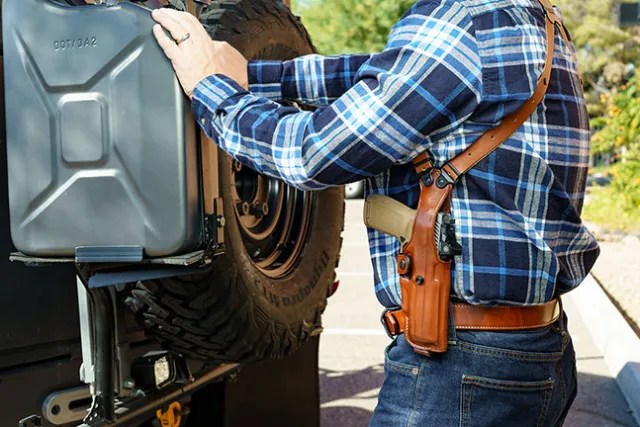
In the diverse world of concealed carry, choosing the right holster is a deeply personal decision, influenced by factors ranging from body type and clothing choices to daily activities and firearm size. While many gravitate towards appendix or strong-side outside-the-waistband (OWB) carry, the shoulder holster often remains an overlooked, yet remarkably effective, option. For a specific set of circumstances and individuals, shoulder holsters can transition from a niche choice to the absolute smartest method for discreetly carrying a firearm. This article will explore the scenarios and advantages that make a shoulder holster the superior choice for concealed carry.
Understanding the Shoulder Holster: Design and Placement
Before delving into its advantages, it’s crucial to understand the basic design of a shoulder holster. Typically, it consists of a harness worn over the shoulders, with one side holding the firearm horizontally or vertically under the armpit, and the other side often balancing the weight with magazine pouches. This design places the firearm in a position that, while perhaps less intuitive for a quick draw for some, offers unique benefits for concealment and comfort.
When Concealment Demands Deeper Cover: Clothing as a Factor
One of the most compelling reasons to opt for a shoulder holster is its exceptional ability to conceal a firearm under specific clothing types.
The Appeal of Layered Clothing: Jackets, Blazers, and Coats
This is arguably where the shoulder holster shines brightest. When wearing a jacket, blazer, sport coat, or even a heavier overcoat, the firearm is perfectly nestled beneath the outer layer.
- Superior Discreetness: Unlike waistline holsters, which can print (show an outline) through lighter fabrics or when bending, a shoulder holster is almost imperceptible under a well-fitting jacket. The bulk of the firearm is absorbed by the natural drape and thickness of the outer garment.
- No Belt Required: This is a significant advantage for those who don’t wear belts, prefer looser-fitting trousers, or whose belt line is already occupied by other gear. The entire weight of the firearm is distributed across the shoulders, not the waist.
- Winter Wear Advantage: During colder months, when jackets and coats are standard attire, the shoulder holster becomes a natural and comfortable extension of your wardrobe, allowing for deep concealment without altering your usual dress style.
Situational Comfort and Accessibility: Beyond the Everyday Carry
The ergonomics of a shoulder holster lend themselves well to certain activities and physical conditions, making it a more comfortable and practical choice in specific scenarios.
For Drivers and Desk Workers: Seated Comfort
Individuals who spend a significant portion of their day seated – whether commuting, driving for work, or at an office desk – often find waistline holsters uncomfortable, as the firearm can dig into the hip or back.
- Unrestricted Movement While Seated: A shoulder holster keeps the firearm off the hips and away from the lower back, allowing for unrestricted movement and superior comfort when sitting for extended periods. There’s no pressure point from the gun against the seat or your body.
- Easier Access in a Vehicle: While drawing from a shoulder holster in a vehicle requires practice, it can often be more accessible than a waistline holster, especially with seatbelts engaged. The firearm is positioned closer to the hand when arms are bent, a common driving posture.
Larger Firearms and Optics: Distributing the Load
For those who carry larger handguns, full-size firearms, or those equipped with red dot optics and weapon lights, waistline carry can become bulky and uncomfortable.
- Better Weight Distribution: The shoulder harness effectively distributes the weight of a heavier firearm across both shoulders, reducing localized pressure points on the hip or lower back. This makes carrying larger handguns much more manageable and comfortable throughout the day.
- Accommodating Accessories: The underarm placement often allows for easier accommodation of firearms equipped with extended magazines, suppressors, or tactical lights, which can be challenging to conceal at the waist.
Conclusion
The key to successfully leveraging a shoulder holster lies in understanding its unique characteristics, practicing the draw and re-holster diligently, and accepting its dependence on outer garments. When these factors align, the shoulder holster transforms from a less common alternative into a supremely effective and discreet method of concealed carry, empowering individuals to confidently and comfortably exercise their right to self-defense.

 Best Legal Advice