
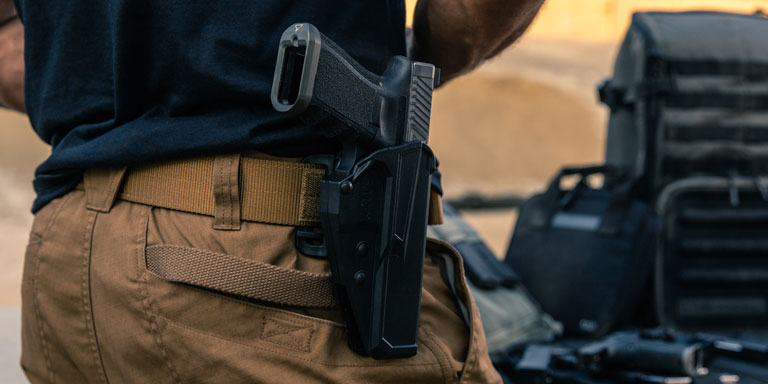
For responsible firearm owners, the choice of a pistol holster is arguably as critical as the choice of the firearm itself. A holster is not merely a piece of fabric or plastic used to carry a gun; it is a critical safety device, a functional tool that dictates the speed of access, the comfort of carry, and the overall security of the weapon. A poorly chosen holster can compromise safety by failing to cover the trigger guard, slow down response time in an emergency, and make concealed carry impractical due to discomfort. Selecting the “best” pistol holsters is highly personal, as it depends entirely on the shooter’s specific needs, daily activities, body type, and, most importantly, the intended purpose of the carry.
Navigating the vast market of holster materials, designs, and carry positions can be overwhelming. The process requires a systematic approach that prioritizes safety, retention, and access in the context of the user’s lifestyle. It demands a thoughtful assessment of the environment in which the firearm will be carried—whether it’s concealed under a suit, openly carried on a range belt, or secured for deep concealment.
Prioritizing Safety and Retention: The Non-Negotiables
Before considering comfort or material, the first criteria for any holster must be safety and weapon retention. A proper holster must fully encapsulate the trigger guard, ensuring that nothing—no clothing, fingers, or foreign objects—can accidentally contact the trigger during carry or holstering. This is the paramount safety rule.
Retention refers to the holster’s ability to keep the firearm securely in place until the user intentionally draws it. Retention systems fall into two main categories:
- Passive Retention: This relies on friction, molded fit, and tension applied by the holster material itself. Kydex holsters, for example, are molded precisely to the contours of the firearm, holding it securely with an adjustable friction screw. This is common for concealed carry where speed and simplicity are valued.
- Active Retention (Level II or III): This involves a mechanical device, such as a thumb break, hood, or lever, that must be purposefully disengaged by the user before the firearm can be drawn. This is essential for open carry, law enforcement, or security roles where there is a risk of a grab attempt. For everyday concealed carry, passive retention is often sufficient, but for any exposed carry, active retention is a must.
Always test the holster by shaking it vigorously while it is attached to a belt to ensure the firearm does not dislodge accidentally.
Material Science: Kydex, Leather, and Hybrids
The material of the holster profoundly affects its durability, retention, and comfort.
- Kydex: This is a rigid thermoplastic acrylic-polyvinyl chloride material. It is the gold standard for modern holsters because it is precisely molded, offering outstanding passive retention and ensuring the trigger guard is always fully covered. Kydex is highly durable, impervious to sweat and moisture, and allows for a smooth, fast draw and easy re-holstering. It is the preferred material for AIWB and high-performance IWB carry.
- Leather: Traditional leather holsters offer superior comfort as they mold to the body over time. They are quieter and generally more aesthetically pleasing. However, leather can be problematic: it can soften over time, potentially losing its retention or, critically, collapsing when the firearm is drawn, making one-handed re-holstering difficult and dangerous. If choosing leather, ensure it is thick, high-quality, and specially reinforced around the mouth of the holster.
- Hybrid: These holsters combine a rigid Kydex shell (which holds the firearm and covers the trigger) with a flexible backing pad (often leather or thick neoprene) that rests against the body for comfort. They offer the safety of Kydex with the comfort of a softer material, making them very popular for general IWB carry.
Conclusion: A Purpose-Driven Investment
Choosing the best pistol holster is a deeply personal and purpose-driven process that should prioritize safety above all else. It is not about finding a single perfect product, but finding the one that provides the best combination of trigger safety, weapon retention, and accessible comfort for your chosen method of carry. Treat the holster as the vital piece of safety equipment it is: invest in quality Kydex or reinforced leather, ensure it matches your lifestyle, and never compromise on a holster that fails to fully cover the trigger guard. The right holster will make your firearm safe, comfortable to carry daily, and instantly accessible when you need it most.

 Best Legal Advice